
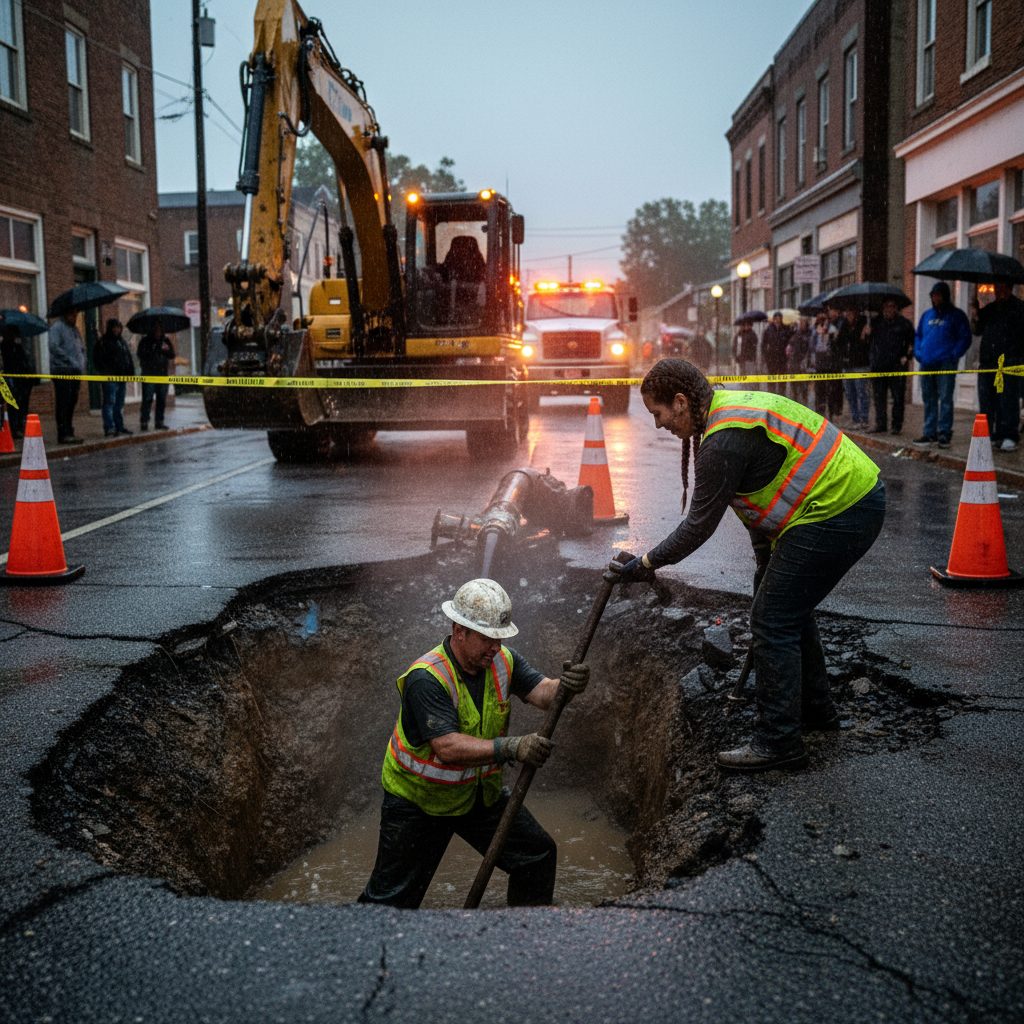
Crossville sits on the Cumberland Plateau where cool winters and occasional freezes drive corrosion through galvanized pipes in older stock found in Downtown Crossville and Fairfield Glade. Thomas Whitaker sees homes built before the 1970s where mineral-rich water accelerates rust and restricts flow, especially after heavy rains common year-round. When a sudden freeze hits Lake Tansi or Cumberland Cove, weakened sections often leak first. He routes new PEX or copper through accessible crawl spaces and attics to avoid slab disruption common in these neighborhoods. Emergency Plumbing calls frequently trace back to these failing lines.
Galvanized steel in Cumberland County homes tends to fail at threaded joints and where it meets dissimilar metals. Thomas Whitaker cuts out the old pipe in sections, installs dielectric unions, and pressure-tests the new run before closing walls. Soil on the plateau is acidic enough to shorten exterior service life, so he sleeves any below-grade sections. Homes near Meadow Park Lake or the Cumberland County Courthouse often have narrow basements that require fish-tape routing rather than full demolition. He always pulls permits when the job touches the main water service line.
Thomas Whitaker serves Deer Creek, Lake Tansi, and nearby Pleasant Hill where terrain slopes create low spots that trap sediment and speed internal rust. Repiping here usually includes replacing the main shutoff and adding accessible valves for future maintenance. He coordinates with local code on backflow prevention when tying into the municipal supply. After severe thunderstorms, he checks for water intrusion that can corrode new fittings if not sealed properly. Work in these areas stays efficient because he maps the original pipe runs from decades of service calls in the same subdivisions.
Technician insight
In Crossville the worst galvanized sections are almost always the hot-water lines because heat speeds internal corrosion. Thomas Whitaker keeps a supply of 3/4-inch PEX and sharkbite transition fittings on the truck for quick isolation when a line bursts during a freeze.
Freeze Damage in Fairfield Glade
A 1968 Fairfield Glade home lost pressure after a hard freeze; Thomas Whitaker bypassed the rusted galvanized main with PEX through the crawl space and restored flow the same day.
Galvanized Pipe Repiping Services We Offer
✓Whole-House Galvanized Replacement
Full removal of galvanized supply lines and installation of PEX or copper throughout the home to restore pressure and eliminate rust.
✓Kitchen And Bath Repiping
Targeted replacement of galvanized branches feeding sinks, tubs, and showers while leaving unaffected lines in place.
✓Slab Leak Galvanized Bypass
Reroutes supply lines above grade when slab-embedded galvanized pipe leaks, avoiding concrete demolition in Crossville homes.
✓Exterior Service Line Upgrade
Replaces galvanized water service from meter to foundation with modern material rated for plateau soil conditions.
✓Crawl Space Galvanized Removal
Accesses and replaces corroded lines under Fairfield Glade and Cumberland Cove homes without disturbing finished interiors.
Galvanized Pipe Repiping Cost in Crossville, TN
| Service | Typical Range | What Affects It |
|---|---|---|
| Whole-house repipe | $4,800–$8,200 | Two-story homes or limited crawl space access increase cost |
| Kitchen and bath branch repipe | $1,600–$3,100 | Number of fixtures and wall access required |
| Exterior service line upgrade | $1,200–$2,400 | Distance from meter and terrain slope |
| Slab bypass reroute | $2,300–$4,500 | Length of new overhead run and fixture count |
Ranges are typical for Crossville, TN and confirmed with an exact written quote before any work starts.
How it works
- 1
Site Assessment
Thomas Whitaker inspects visible galvanized runs, tests water pressure, and maps routes through basements or crawl spaces typical in Crossville homes.
- 2
Material Selection
He chooses PEX or copper based on home age, exposure, and freeze risk on the Cumberland Plateau.
- 3
Isolation And Removal
Water is shut off at the main, old sections are cut out, and new lines are pulled through existing paths.
- 4
Pressure Testing
New piping is pressurized and checked for leaks before walls or insulation are restored.
- 5
Final Walkthrough
Fixtures are flushed, valves labeled, and the homeowner shown shutoff locations for future reference.